
Before pupils leave, check the arrangements they will actually meet: the route, waiting space, lighting, adult cover and handover. Record anything unresolved, the protective response needed now and who will verify it. The routines map addresses wider transitions. This departure plan needs to work during today's collection window, including when the usual adult is absent or a family's arrangements change.
This readiness walk is for behaviour, pastoral and school leaders in England. It is a suggested management tool, not a statutory checklist or certification that a site is safe. Use it within the school's risk assessment, safeguarding, accessibility and collection procedures. It sets no national dismissal age, staffing ratio or collection deadline.
Shorter daylight gives staff a reason to check visibility at the actual departure time. It doesn't establish that behaviour incidents rise in winter. A quiet incident log can't establish that a route is accessible or that supervision is in place.
Start where pupils will wait
Walk the relevant areas early enough for problems to be addressed before departure. Check the conditions expected during the actual window. An inspection in bright morning light may leave the afternoon question unanswered.
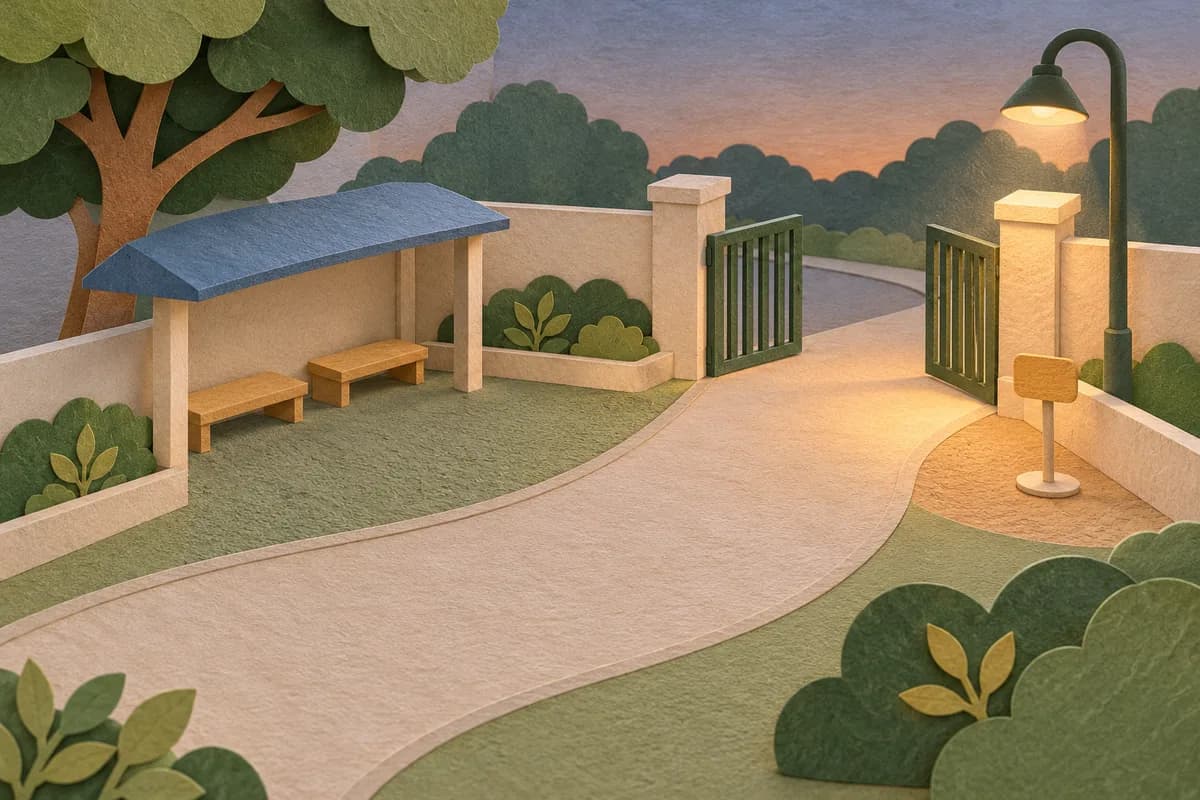
Look at whether pupils and adults can see the route, changes of level, boundaries and each other. Check external lighting through the school's agreed arrangements. Notice obstructions, slippery surfaces, congestion and access to waiting areas. Where vehicles and pedestrians meet, use the existing traffic-management arrangements and raise concerns with the responsible lead.
DfE estates guidance includes external lighting and access routes among school-site considerations. HSE highlights vehicle movements associated with schools, including immediately outside. These sources support checking the setting; they don't approve a particular gate layout. An adult standing nearby doesn't resolve a traffic risk by itself.
Consider pupils who use mobility aids, need additional processing time or require an agreed adjustment. Ask whether the waiting arrangement remains usable when umbrellas, bags and arriving adults occupy the space. An empty route can give a misleading impression of access.
Don't take a pupil through a potentially unsafe route to test it. Arrange safe observation and appropriate consultation. A defect needs an authorised response through school procedures, with immediate protection where necessary. DfE health and safety guidance supports proportionate risk assessment. A checklist entry alone provides no protection.
Put cover and handover beside the physical check
Confirm who covers each agreed position, how cover is obtained and how staff contact the responsible person if arrangements fail. Check that those adults know the current plan. Yesterday's rota doesn't confirm today's availability.
Follow the school's age-appropriate independent-travel and authorised-collection arrangements. Confirm how a permitted change reaches the staff receiving it, including information arriving close to departure. Give families an accessible route to clarify an arrangement or correct inaccurate information.
Late collection, disputed collection and a missing pupil require the school's applicable procedures. Staff need to know whom to contact and what protective action those procedures require. This walkthrough supplies no substitute release rule.
If information raises a safeguarding concern, follow the child protection procedure and involve the DSL or deputy without delay. Don't investigate a disclosure during this check or wait for the next review. Use the appropriate referral or emergency route when required.
Keep six things in the record
A short record can preserve what was checked and what remains unresolved. These six fields are a suggested working aid. Keep sensitive pupil information in authorised records, with necessary access and the school's retention arrangements. A general site sheet doesn't need copied safeguarding narratives.
Actual window and conditions. Record the departure period and conditions checked. Identify anything expected but unobserved, such as darkness or the busiest collection period. Keep assumptions visible.
Accessible route and waiting area. Describe the route, waiting arrangements, barriers and agreed adjustments. State whether the check covered their use during collection. “Clear at 10am” leaves the afternoon question open.
Adult position and cover contact. Identify responsible adults, agreed positions and the contact for obtaining cover. Record whether availability was confirmed and any unresolved gap.
Policy-consistent handover and communication. Note which arrangements apply and how staff receive authorised changes. Include the clarification route. Keep family disputes and restricted information out of this general record.
Open defects and protective response. State the problem, what has been done now, who owns the repair or further decision and any restriction or alternative approved through school procedures.
Verification today and follow-up. Name the responsible lead and the time by which they will check today's arrangements. Set a next-school-day follow-up for unresolved work. Allocation or a completed task doesn't establish that the arrangement works.
When the first account changes the question
In this invented example, a note from an earlier departure records that a pupil waited beside the doorway until the collection queue cleared. The observation doesn't explain why.
An agreed end-of-day support arrangement appears in the pupil's plan. Staff can't yet establish whether it was delivered during that earlier session. That remains unknown. The pupil explains that the usual waiting space becomes difficult to reach when adults gather. A parent corrects the assumption that the family wanted a later departure.
Staff now need to check access to the waiting space and delivery of existing support. The pastoral lead arranges an immediate policy-consistent response, confirms who will provide support and verifies it during today's departure window. They set a follow-up for 6 November 2026, assuming this fictional school's calendar confirms it is the next school day. The pupil's account, family correction and staff observation remain distinguishable.
None establishes a diagnosis or proves why the pupil waited. An uneventful departure doesn't establish that every barrier has gone. Offer the pupil speech, writing, symbols or a simple route sketch, with a trusted adult if helpful. Record missing pupil feedback, invite relevant family knowledge and preserve disagreements with the next evidence request.
The SEND Code supports pupil and parent involvement in considering needs and reviewing support. Equality Act school duties, including reasonable adjustments, and agreed provision remain in place. Respond proportionately to harm and follow the applicable behaviour and safeguarding procedures. Any suspension or permanent exclusion requires its formal process; lesson removal and managed moves are distinct arrangements. This check authorises none of them, and never an informal exclusion or disciplinary instruction to collect a pupil early.

Leave with an owned arrangement
Before departure, the responsible lead should know what is ready, what remains unresolved and which protective arrangements are operating. If suitability remains uncertain, follow school escalation and risk-management procedures. A completed form isn't permission to proceed.
Where available to authorised staff, Student Radar's Behaviour Analytics helps review recorded incident patterns within a selected scope and reporting window. The Heatmap provides relevant pupil context. Check fields, coverage and permissions. These views can't inspect a light, confirm duty cover, validate collection authorisation or certify a safe route. They don't predict incidents or decide diagnoses, labels, sanctions or referrals. Keep the readiness record in the school's agreed process, with human review. A behaviour-focused walkthrough can show those product views and their limits.
Sources and further reading
Sources reviewed 5 November 2026. School duties and DfE guidance discussed here apply to England.
- Department for Education, Good estate management for schools: health and safety, updated 20 July 2026; external lighting and access routes.
- Department for Education, Health and safety: responsibilities and duties for schools, updated 5 April 2022; proportionate risk assessment.
- Health and Safety Executive, Frequently asked questions, accessed 5 November 2026; vehicle movements associated with schools, including immediately outside.
- Department for Education, Keeping children safe in education 2026, effective 1 September 2026; Part one, paragraphs 58 to 61.
- Department for Education and Department of Health, SEND code of practice: 0 to 25 years, January 2015, page updated 12 September 2024; paragraphs 6.27, 6.39 and 6.53 to 6.54.
- Equality Act 2010, section 85(6), and section 20, reasonable adjustments.
- Department for Education, School suspensions and permanent exclusions, statutory guidance effective 26 July 2026; paragraphs 18 to 20 on formal processes and informal exclusions.