
Start a school shared-space sensory observation with one defined place, one ordinary activity and a question about access. Record the demand, what happened, the pupil's feedback and the staff review before changing support.
A dining hall, corridor or assembly space can make participation harder. An observation can help staff investigate that possibility. It cannot diagnose a sensory condition, establish intent or prove why behaviour occurred.
This guide is for teachers, pastoral leads, SENCos and school leaders in England. The authorised adult responsible for the space owns the observation with the pupil's teacher and SENCo where relevant.
Define the space before watching the pupil
Replace “lunchtime is difficult” with a boundary: from the dining-hall entrance to collecting food, between 12:10 and 12:20. State what the pupil needs to do there and which agreed support should be available.
Look at noise, lighting, smell, crowding, movement and physical access. Also check whether directions are understandable, adults are available and peers feel safe. A sensory explanation is only one possibility.
Keep the classroom-access checks too: task demand, instruction and model, room and seating, support delivery and pupil feedback. Check whether the activity matches what was taught and whether the first step was demonstrated and understood.
The purpose is access to eating, learning or social participation. Being quieter or remaining in a seat isn't enough evidence that the space works for the pupil. Ask what participation would mean to them.
Keep agreed adjustments and provision in place. Don't expose a pupil to distress, remove support or provoke a response to obtain a baseline. Explain the enquiry in a communication format they can use.
Keep five entries separate in the observation record
Use the following editorial record alongside the school's existing procedures. It is a prompt for human enquiry and correction. It is not a screening instrument or a sensory score.
- Defined space and activity
- Record the boundary, date, time, duration, observer and expected activity. Note the group size and anything unusual about that occasion.
- Demand and support available
- Describe what could be heard, seen or encountered. Record whether agreed equipment, directions, adult help and adjustments were actually available. Separate an adult impression from a measurement.
- Observed response and participation
- Write what the pupil did, when and for how long. Include what they could access, help requested and any distress. Avoid “attention-seeking”, “overloaded” or “refused” as substitutes for the observation.
- Pupil feedback and family correction
- Keep the pupil's account distinct from staff interpretation. Record the communication method, disagreement and anything still unknown. Invite parent or carer correction through an appropriate route.
- Staff review and next comparison
- State the working question, responsible adult, agreed action, review date and comparable opportunities. Record what would require earlier action and which other explanations remain open.
Offer speech, writing, symbols, a room plan or a trusted adult. Ask what helps and gets in the way without supplying the answer. Silence or disagreement doesn't establish consent or non-compliance.
Record uneventful opportunities within the same defined window too. Incident totals omit occasions when access went well. No entry means unknown recording coverage; it doesn't mean no difficulty occurred.
Don't film children or collect other pupils' names for this general record. Keep only information needed for the question, use authorised access and follow the school's retention arrangements.
The ICO's data-minimisation principle requires a clear purpose and proportionate information. Sensitive concerns belong in the appropriate restricted process, with a reference where necessary.
A dining-hall account changes the working question
The following details are invented for this guide. They describe no actual pupil, family, school or Student Radar customer.
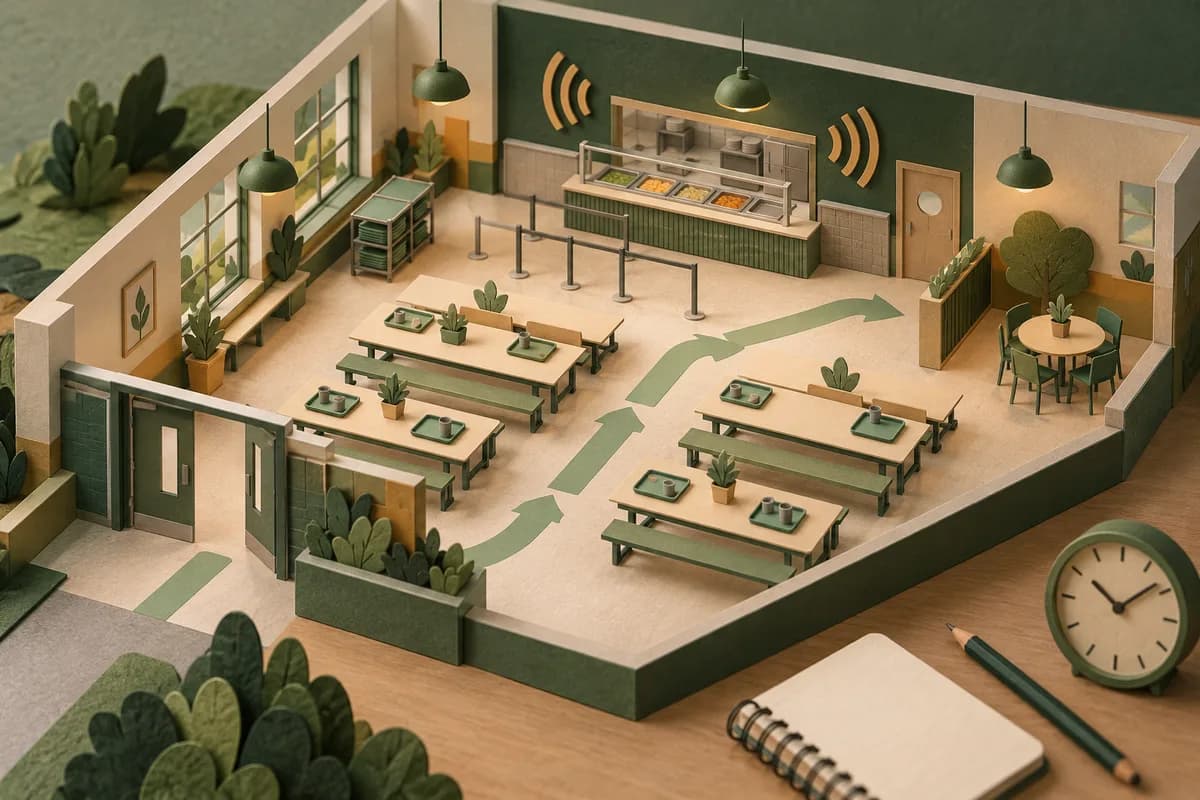
During two observed lunch queues, a pupil covers their ears near the hatch and steps out before collecting food. The observer notes tray clatter, a crowded turn and an adult giving directions from behind.
A first hypothesis concerns noise. Later, with a trusted adult and a simple room plan, the pupil marks the turn and explains that they can't see where to go when the queue moves. They want to eat with friends.
A parent adds that predictable routes have helped elsewhere, but asks staff not to assume noise is irrelevant. The teacher confirms that the agreed visual direction card wasn't available on either occasion.
Staff restore that adjustment immediately. The working question becomes whether a visible route cue supports collecting lunch with peers. They keep the existing support and offer a safe alternative if needed.
In this example, the lunchtime lead and SENCo agree a review on 16 October 2026 after five comparable lunch opportunities. They note queue size, menu, staffing and any changed conditions on each occasion.
They check whether the cue was available and understood, whether the pupil could collect and eat lunch, and how it felt. An absent pupil or missing entry remains a gap. They don't count it as success or failure.
If access improves, staff can continue and review the arrangement. A short comparison cannot isolate cause or predict another setting. Persistent difficulty warrants a wider review with the pupil, family and relevant professionals.
Read sensory evidence within its limits
A 2024 rapid review of school supports for sensory processing challenges found variable evidence quality and no support recommendable without caveats. Choices need the child, school and family context.
DfE's 2025 autism evidence review discusses classroom-environment adjustments for autistic pupils. That population matters: the review doesn't establish that a pupil finding a shared space difficult is autistic.
DfE's separate sensory and physical needs review excludes sensory processing difficulties from its scope. Don't treat its title as endorsement of a sensory programme or turn an observation into a diagnosis.
This guide proposes no therapy, sensory diet or specialist equipment. Where needs require specialist assessment or advice, use the appropriate professional route with the SENCo and family.
Safety and statutory duties continue throughout
DfE's behaviour advice requires a prompt, proportionate response that considers individual circumstances. Protect pupils and staff from harm while examining access. SEND doesn't explain every incident.
Check Equality Act reasonable-adjustment duties, SEN Support and any EHC-plan provision. The SEND Code's graduated approach includes pupil and parent views, delivery and review. This observation cannot amend or replace those duties.
Follow the child protection policy and take any safeguarding concern to the DSL or deputy without delay. Their unavailability must not delay appropriate action through local referral or emergency routes.
Don't use an environment trial to test a disclosure or delay a referral. Bullying, abuse, exploitation or other harm may need a different response from the working sensory hypothesis.
This record authorises no removal, suspension, permanent exclusion or managed move. Formal decisions follow the applicable policy and statutory guidance effective from 26 July 2026. An off-the-record exclusion is unlawful.
Review sooner for distress, worsening access, missed provision or new safety information. At the agreed date, the authorised lead records whether to continue, adapt or close the enquiry, with reasons and unresolved gaps.
How Student Radar supports the review
Where enabled, Student Radar's Behaviour Analytics provides views of recorded behaviour. Authorised staff can inspect pupil context through the Heatmap. Check the recording window and available fields before interpreting a pattern.
Neither view maps the sensory demands of a room or proves a sensory cause. Student Radar cannot diagnose need, infer intent, predict behaviour or choose an adjustment, sanction or referral. Staff retain those decisions.
Use the routines map for a wider transition enquiry and the reasonable-adjustments audit to check agreed support. A behaviour-focused walkthrough can show the recorded product views with their limits visible.
Sources and further reading
Sources checked on 8 October 2026. Statutory and DfE school guidance below applies to England.
- Department for Education, Behaviour in schools, February 2024 advice, especially SEND and proportionate responses.
- Department for Education, Equality Act 2010: advice for schools, May 2014 document; page updated 28 June 2018, chapter 4.
- Department for Education and Department of Health, SEND code of practice: 0 to 25 years, January 2015 statutory code; page updated 12 September 2024, chapter 6.
- Department for Education, Keeping children safe in education 2026, in force 1 September 2026, Part one.
- Department for Education, School suspensions and permanent exclusions, statutory guidance effective 26 July 2026.
- Department for Education, Identifying and supporting the needs of children with SEND in mainstream settings, September 2025 evidence reviews; landing page updated 30 July 2026. Separate autism and sensory/physical reports have different scopes.
- Unwin and colleagues, Evidence Synthesis and Clinical Recommendations for Supporting School Students With Sensory Processing Challenges: A Rapid Review, American Journal of Occupational Therapy, November 2024. Research synthesis, not England statutory guidance.
- Information Commissioner's Office, Principle (c): Data minimisation, accessed 8 October 2026; guidance marked under review.