
A safeguarding chronology should show what the child communicated, how staff supported that communication, what the family contributed and how each point affected the DSL’s decision. Keep those sources distinct. Record disagreement and uncertainty, then link the response to an owner and review date. Voice informs professional judgement; it doesn’t decide the safeguarding route or delay urgent action.
This guide is for schools and colleges in England and is accurate on 13 August 2026. Follow your child protection policy, local safeguarding partnership procedures and emergency route.
Use the guidance that applies today
Keeping children safe in education 2025 is the current statutory guidance until 31 August 2026. Paragraph 95 says school and college leaders should ensure the child’s wishes and feelings are taken into account when deciding what action to take and what services to provide.
KCSIE 2026 was published on 7 July 2026 for preparation. It comes into force on 1 September 2026 and retains that expectation at paragraph 118. It isn’t the operative version today.
Working together to safeguard children 2026 is current statutory guidance in England. It says children’s wishes and feelings should be sought, heard and responded to. Practitioners should see and speak to the child, listen, observe, take their views seriously and work with families and people who know them well.
Working Together also expects partnership with parents and carers as far as possible. The child’s wishes, feelings and best interests stay central. Family knowledge can add context; it can’t be treated as the child’s account or used to overwrite it.

Follow voice through six lines of the record
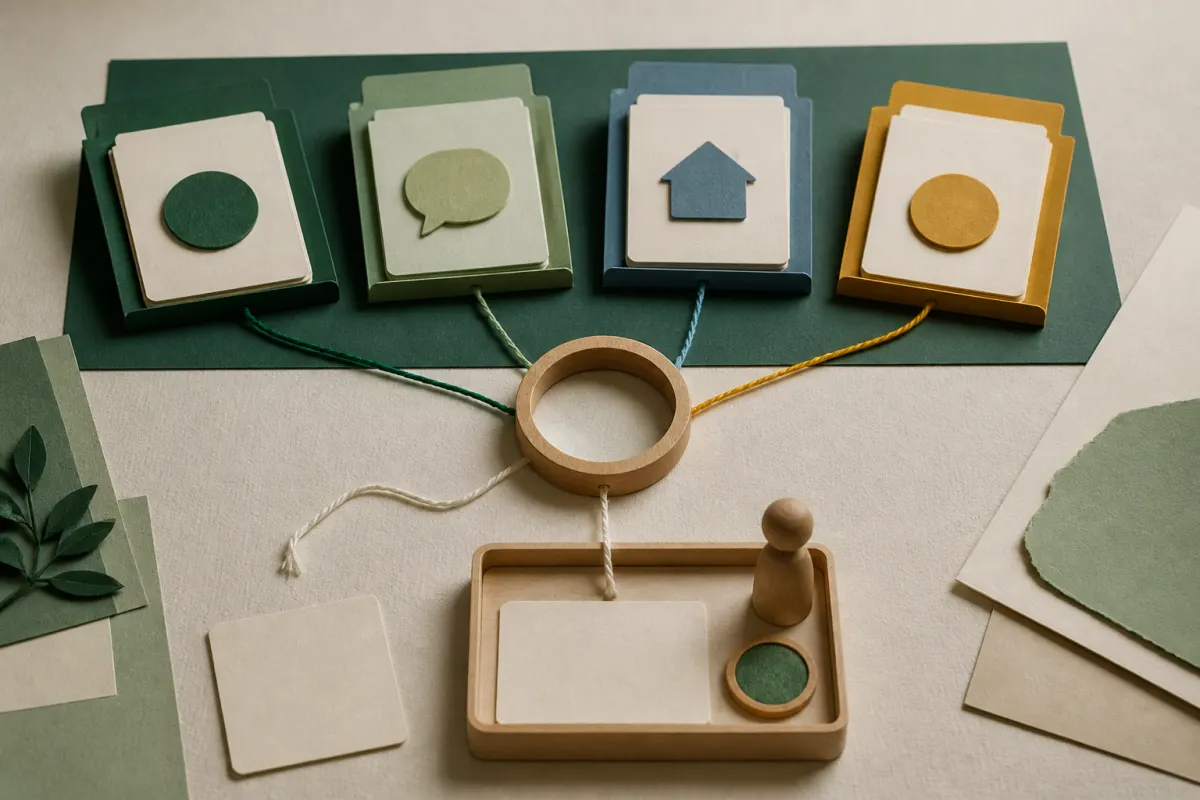
Don’t begin with a generic voice box. Open the authorised source record and test whether a later reviewer can follow six connected lines without guessing what happened.
- Source: identify whether the entry came from the child, a parent or carer, a staff observation, another professional or a document. Preserve the date and author.
- Communication: record the method, support and setting. Note an established AAC system, interpreter, trusted adult, processing time or other access arrangement used.
- Account: capture the child’s words or communication as faithfully as possible. Keep a family contribution and professional observation in separate entries.
- Interpretation: label the adult’s cautious understanding. Record ambiguity, conflicting accounts, missing context and anything that still needs checking.
- Response: show what the DSL considered, decided and did, including the reason for the decision and what was explained to the child or family where safe.
- Review: give the next action one accountable owner, a date and the evidence or fresh information that could change the professional judgement.
A child may communicate through words, behaviour, play, drawing, symbols, signing or an established device. Observation can prompt careful enquiry, but it remains an adult observation until the child’s meaning has been checked as far as possible.
Make participation accessible and honest
Working Together recognises that children may find it difficult to speak about what they need or what has happened. Review the pupil’s known communication needs before choosing the person, place, pace and method. Use professional interpreters where needed. Don’t rely on a family member to interpret sensitive communication.
Explain what can be kept private, what may need to be shared and who makes the decision. A child’s wish that information is not shared must be heard and recorded, but it can’t become a promise of confidentiality that prevents necessary safeguarding action.
The same discipline applies to family participation. Record what the parent or carer said, what information was provided, any objection or disagreement and how the school responded. Avoid labels such as “difficult to engage” when the record could state the attempts made, access barriers, response and next agreed contact.
Walk one made-up record from voice to review
The following details have been combined solely to illustrate the decision. An authorised concern record notes that a pupil used their established symbol board to indicate they did not understand who would attend a planned meeting. The entry preserves the symbols selected, the staff member present and what remained unclear.
A separate communication log records that a parent asked for an interpreter and disagreed with one part of the school’s summary. The pupil profile confirms the established communication method. An open safeguarding action has an owner but no review date.
The DSL reads each authorised source. They arrange an accessible follow-up with a familiar, appropriately trained adult, provide a professional interpreter for the family conversation and record the child’s account, family contribution and professional interpretation separately. The DSL records the governed next step, reason, owner and review date.
The connected records change the question from “Was voice collected?” to “Could the child and family understand and influence the process, and is the DSL response traceable?” They do not establish whether harm occurred, prove the meaning of the symbols, validate either adult account, determine a threshold or select a referral route.
Keep participation separate from consent and urgency
The Department for Education’s May 2024 information-sharing document is non-statutory advice. It encourages openness with children and families when safe, while making clear that consent is not usually the lawful basis for safeguarding sharing. If a child or carer objects and information is still shared, record the reason and legal basis.
Share only information that is necessary, proportionate, relevant, adequate and accurate. The advice says an entire case file is rarely needed. The ICO’s safeguarding-sharing guide supports fair, proportionate and lawful sharing, although the ICO currently marks that guide as under review following the Data (Use and Access) Act.
If there is immediate danger or an urgent concern, use the school’s procedure and the relevant local or emergency route now. Don’t wait for an accessible follow-up session, a fuller dataset, a scheduled case review or a software update.
Where Student Radar fits
Student Radar Safeguard supports controlled concern recording and casework. Chronology can show attributed entries and action state, while the DSL Action Board supports assignment and review points for authorised staff.
A pupil profile or AAC Board may provide relevant communication context where it matches the pupil’s established plan. Keep the detailed safeguarding narrative in its authorised source record. Open the evidence rather than copying it into a general profile or communication tool.
These features don’t decide what a child means, verify an account, substantiate harm, score risk, determine a threshold, make a referral or replace the DSL and local procedure.
Close the pre-term review with accountable questions
- Can an authorised reviewer distinguish the child’s account from every adult account?
- Is the communication method and any uncertainty recorded without interpretation drift?
- Can the child or family see how their contribution affected the response, where safe?
- Are objections, disagreements and reasons for sharing or withholding information visible?
- Does every open response have one owner, a review date and a clear source record?
- Would urgent action still happen immediately if participation work were incomplete?
Use the separate safeguarding chronology audit for the wider recording, ownership and access check. The pupil voice before transition guide covers SEND transition decisions rather than safeguarding case review.
Sources and further reading
- Department for Education, Keeping children safe in education, page updated 7 July 2026. KCSIE 2025 applies until 31 August 2026; KCSIE 2026 comes into force on 1 September 2026.
- Department for Education, Working together to safeguard children 2026, statutory guidance published 18 March 2026.
- Department for Education, Children’s social care national framework, statutory guidance published 15 December 2023; page updated 9 July 2026.
- HM Government, Information sharing advice for safeguarding practitioners, non-statutory advice updated 1 May 2024.
- Information Commissioner’s Office, A 10 step guide to sharing information to safeguard children, published 14 September 2023 and marked under review on 13 August 2026.
Student Radar can help authorised DSL teams keep source, response, ownership and review connected. Book a demonstration to test the workflow against your policy and access model.