
Compare two work samples to examine what teachers notice, then discuss the evidence and annotate what remains uncertain. Keep each first reading before hearing colleagues. Restore task conditions, support and curriculum context before deciding what to teach. This short routine supports professional learning in England. It doesn't produce a reliable pupil ranking, establish a statutory standard or replace an assessment framework.
For assessment leads, teachers, SENCos and SLT preparing end-of-term discussions, the worthwhile output is a clearer teaching question. Agreement is welcome when the evidence supports it. An unresolved difference can be the more informative meeting record.
Set the boundary before putting work on the table
STA's 2027 KS2 teacher assessment guidance, section 8, says schools should not rely on comparative judgement or AI to make or moderate statutory teacher assessment judgements. Those decisions require teachers' professional judgement against the statutory framework. Use that process for statutory KS2 assessment. The discussion below is an optional classroom evidence exercise, outside that decision.
Decide the curriculum question first: for example, what would show that a pupil can explain why a method works? Select work addressing that question. Don't compare a polished extended project with a first attempt on an unfamiliar task and call the difference progress. The Commission on Assessment Without Levels puts assessment purpose and curriculum at the centre of the school's approach.
Use samples only within the school's authorised arrangements. Remove names and prior grades from the discussion copies where feasible, while retaining a secure link to the originals. Handwriting or distinctive content may still reveal identity; describe the exercise as identity-masked where possible, never guaranteed anonymous. Keep access to staff who need the evidence. Don't remove or withhold pupils' usual support to make their work look more comparable.
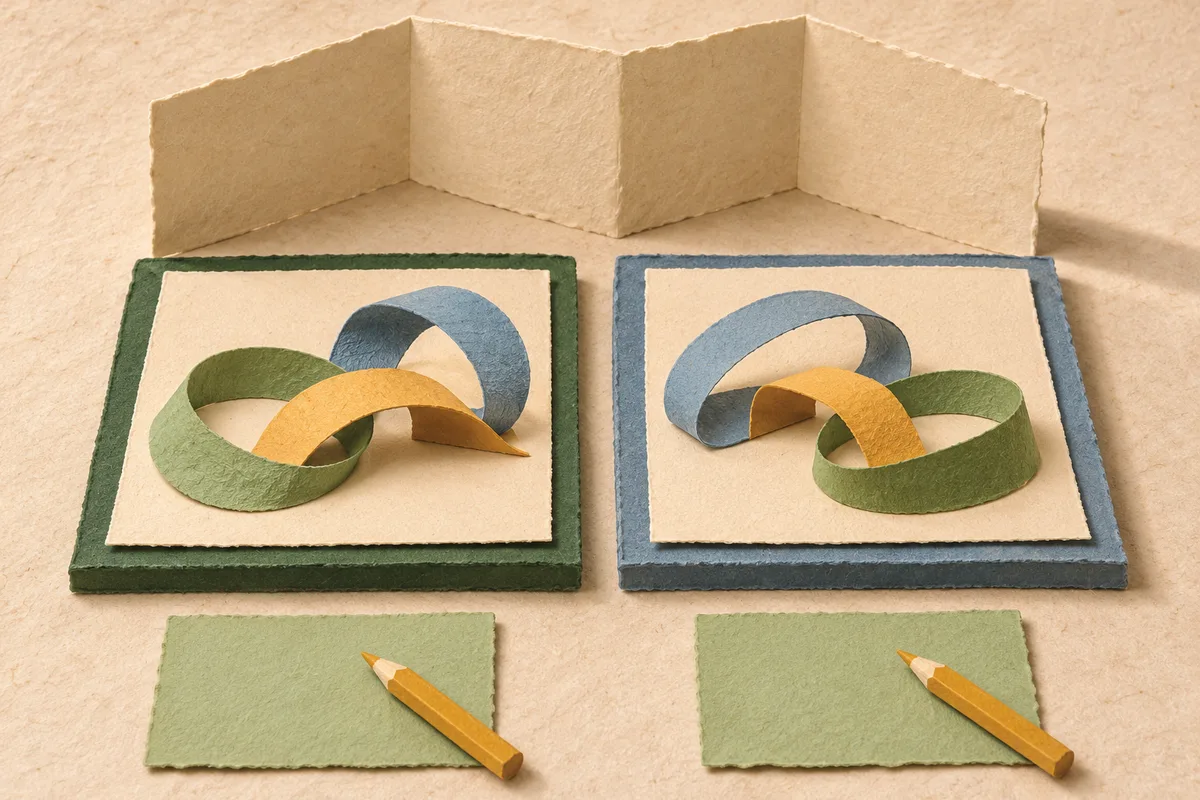
Blind compare, discuss, annotate
- Prepare the question and source note. Record task, date, curriculum focus, teaching already encountered, response mode and work version. Keep support, adjustments, prompting and interruptions available for the context check. If those details are missing, flag the gap before comparing.
- Read independently. Each colleague identifies evidence relevant to the question and a limitation. If one sample seems to demonstrate the intended learning more clearly, state exactly where. Allow “insufficient evidence” or “different aspects shown”. Don't force a winner.
- Discuss the difference. Reveal both first readings together. Point to the work and explain the criterion each person used. Was someone rewarding presentation, vocabulary or length when the question concerned reasoning? Keep the original comments even if a colleague changes their view.
- Restore context. Check conditions, curriculum exposure, response mode and support. Ask whether the samples can answer the same question. Pause the comparison when an unknown condition could change its meaning. Agree who retrieves that information.
- Annotate a teaching response. Record the provisional interpretation, disagreement, missing evidence and reversible next step. Enter the responsible teacher's actual name, the assessment lead's review role, version and review date. State what evidence would reopen the interpretation.
Keep the note short enough to use again: question; sample references; independent observations; context checked or missing; provisional interpretation; action owner; review point; correction route. This is a suggested school-held note, not a statutory form or a set of promised software fields. Another meeting isn't itself an improvement in the evidence, however neatly it fits in the calendar.
When the context changes the comparison
This made-up Year 5 mathematics record illustrates the discussion; it contains no real pupil data or school results. Two teachers examine explanations of a fraction method. One initially favours the longer response. The other notices that the shorter response identifies why the method works, while the longer one repeats the procedure. They preserve both readings and return to their question about explanation.
The source note then shows that one response followed adult prompts. The record for the other doesn't confirm which support was used. Attendance and lesson records show missed curriculum exposure, but don't establish what the pupil understood. The SENCo checks the agreed adjustments with the teacher. The comparison can't settle independent understanding while those conditions remain unclear.
In the actual school note, the teacher enters their own name and takes responsibility for checking the source information. They plan another ordinary opportunity to explain the method with the pupil's usual adjustments, recording any prompting. The assessment lead reviews the interpretation after that lesson. A different explanation, corrected conditions or the pupil's account of the task could change the judgement sooner.
Invite the pupil to explain through their usual communication route. Tell parents and colleagues how to question the interpretation or correct a source through the school's agreed contact. Retain the earlier note, attribute amendments and record their date. A disputed interpretation stays visible until a professional has considered the challenge.
A discussion is not a measurement system
Tim Gill's Cambridge assessment study reanalysed paired comparisons from assessment research. Its findings caution against assuming that an individual holistic comparison is inherently better than a judgement based on marks. A few comparisons in a staff meeting don't inherit the properties of a designed, repeatedly sampled comparative-judgement system. This routine makes no reliability estimate or claim that masking identity removes bias.
Ofqual's explanation of reliability distinguishes consistency from the wider question of whether an assessment measures what it is intended to measure. Staff agreeing on attractive handwriting won't establish mathematical reasoning. Keep uncertainty in the record; missing evidence isn't a zero or evidence that a pupil can't do something.
Don't convert the exercise into fixed labels, automatic groups, referrals, pupil risk scores or high-stakes recommendations. A later change doesn't prove that teaching or support caused it: curriculum exposure, attendance, delivery, practice, maturation, measurement error and missing evidence may contribute. Small-cohort patterns are unstable and potentially identifiable. Suppress or aggregate where needed and explain that the pattern may not generalise.
Classroom adjustments and formal access arrangements for regulated assessments have separate purposes and rules. This routine grants no formal arrangement. Consult the responsible assessment body's rules for the particular assessment when that question arises.
Student Radar's Digital Markbook supports recording classroom assessment outcomes where staff have access. Keep this discussion note and its versions in the school's approved record; don't assume the markbook supplies blind comparison, reviewer stamps or a moderation queue. The teacher retains the judgement. For an earlier planning question, use the assessment blueprint. If two completed measures conflict, the assessment disagreement guide follows that separate decision. Explore assessment tracking with those limits in view.
Sources and further reading
Primary material read on 24 November 2026. This routine is an editorial proposal for England, not an endorsed or validated assessment method.
- Standards and Testing Agency: Key stage 2 teacher assessment guidance 2027. Collection published 22 November 2018, updated 2 November 2026; sections 4 to 8. Statutory KS2 scope in England.
- Tim Gill: The concurrent validity of Comparative Judgement outcomes compared with marks. Cambridge University Press & Assessment, Research Matters 33, Spring 2022, pages 68 to 79. Research findings, not statutory guidance.
- Ofqual: Introduction to the concept of reliability. Published 16 May 2013. Explanatory background covering England, Northern Ireland and Wales; historical examples aren't present-day assessment instructions.
- Commission on Assessment Without Levels: final report. DfE and STA, 17 September 2015. England; background advice on assessment purposes and curriculum.